Addressing basic needs to improve student success
Addressing basic needs—like food, housing, and healthcare—is an essential part of helping students succeed in higher education. Across California, far too many college students face chronic uncertainties in these areas, despite research that suggests many are eligible for benefit programs designed to meet their needs. Calbright College, a new community college dedicated to expanding options for adult learners across California, is leveraging its role as an R&D engine for the California Community Colleges system to develop scalable, data-driven approaches that can boost student uptake and retention of public benefits.
Our approach
In collaboration with Calbright College and Catbird Strategies, we’re testing a cross-functional, student-centered approach to improving how colleges support students in accessing public benefits. This work is grounded in the belief that meaningful, scalable change requires designing with students, coordinating across institutional teams, and applying data and behavioral science throughout the student journey—not just at a single point in time.
Guided by our behavioral science framework, we look for opportunities to redesign key moments where students may experience confusion, uncertainty, or friction. Across this work, deep student engagement is central: we listen closely to students through surveys, interviews, workshops, and longitudinal follow-up to understand their lived experiences and ensure that new approaches respond directly to real needs.
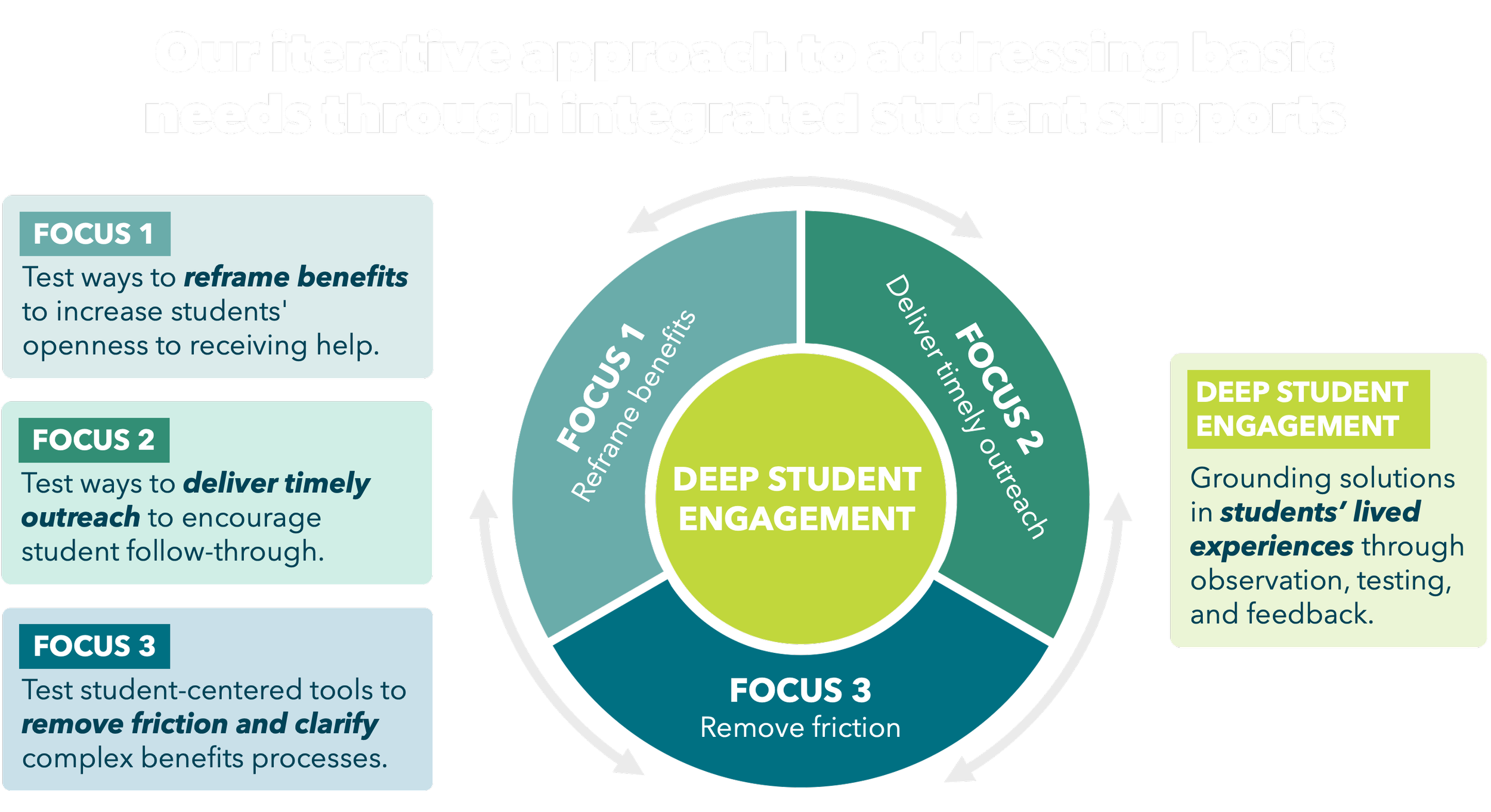
Our efforts focused on three complementary areas:
Reframing benefits to increase openness: We tested ways to introduce public benefits as a normal, supportive part of the college experience using concrete, strengths-based language to help students recognize available support and feel comfortable sharing their needs early.
Delivering timely, supportive outreach to encourage follow-through: We explored how message framing and timing—particularly outreach delivered soon after onboarding or at moments when financial strain may be more salient—can help students build intention and take next steps toward available resources.
Designing practical tools to reduce friction in the application process: Through observation, user testing, and direct feedback from students, we identified where benefits applications feel complex or high-stakes. We then co-designed tools—such as application checklists, journey maps, and tips—that clarify expectations, reduce cognitive load, and support students in moving forward with confidence.
“College students often are eligible for public benefits programs but may not realize these supports are available to them. The work Catbird Strategies is doing with Calbright and ideas42 to test messaging and develop strategies to connect students to services will be of great help at Calbright and other campuses throughout the system.”
This work is informed by decades of behavioral science research, but equally by the expertise of Calbright faculty and staff, and by partnerships with experts in the public benefits space. Together, these perspectives help ensure that what we design is not only effective at Calbright, but transferable to sister colleges and adaptable across institutional contexts.
With students located in nearly every California county and a strong focus on working adult learners, Calbright is uniquely positioned to test approaches that can inform practice statewide—supporting not only immediate student outcomes, but long-term learning, collaboration, and impact at scale.
The results
Through a series of pilots with Calbright students, we have tested and refined scalable, behaviorally informed approaches to supporting basic needs access—generating clear insights into what helps students disclose needs, engage with support, and follow through on next steps. Building on this foundation, we are now expanding this work through new pilots with sister colleges, including Los Angeles Trade-Technical College and Barstow Community College, to test how these approaches translate across institutional contexts.
By continuing to apply our model of rapid prototyping, student-centered design, and data-driven iteration, we aim to deepen evidence around what works and to develop strategies that can support student success at scale.
Pilot 1: Reframing questions to increase reporting of basic needs insecurity
Students who received new, behaviorally informed question framing were 2.5 times more likely to report a basic needs challenge and 2.2 times more likely to respond—giving Calbright a clearer picture of who needs support and when.
Pilot 2: Engaging students to follow through on basic needs support
Students who received behaviorally informed outreach were 1.2 times more likely to register for a public benefits workshop and 1.4 times more likely to attend. Inviting students within the first month of their enrollment led to more than twice the rate of attendance.
Pilot 3: Proactively supporting students through public benefits applications
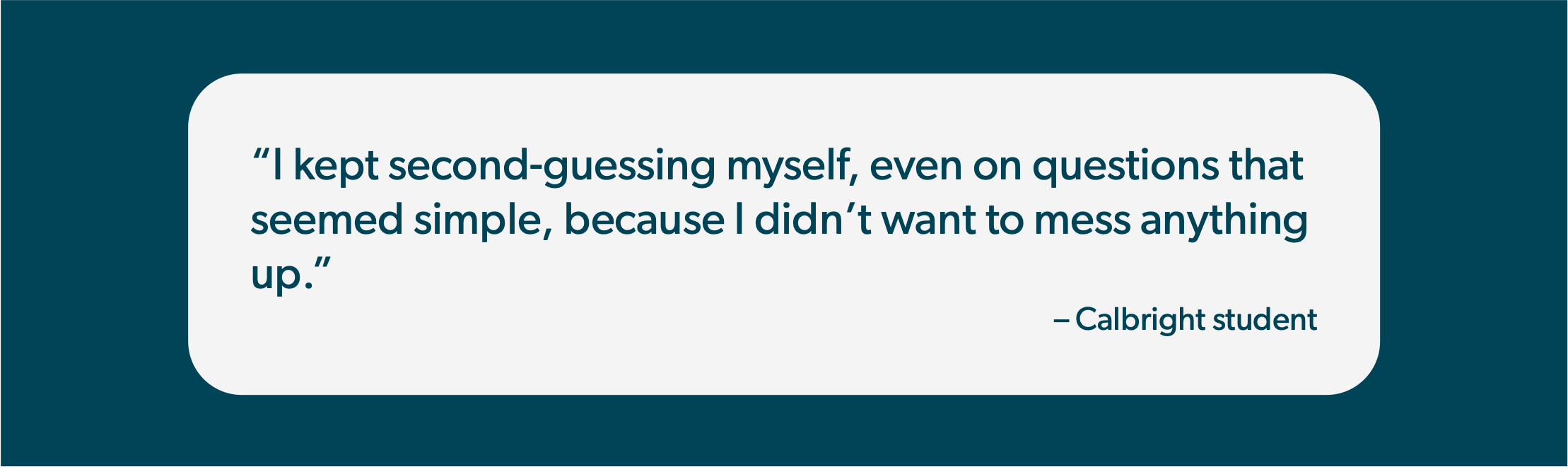
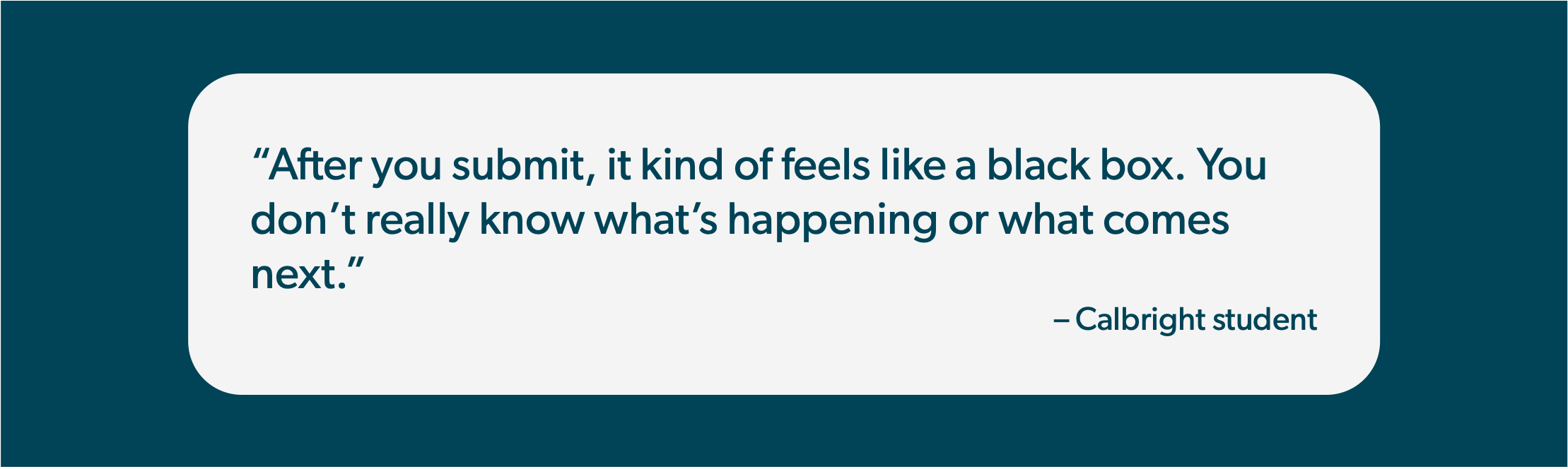
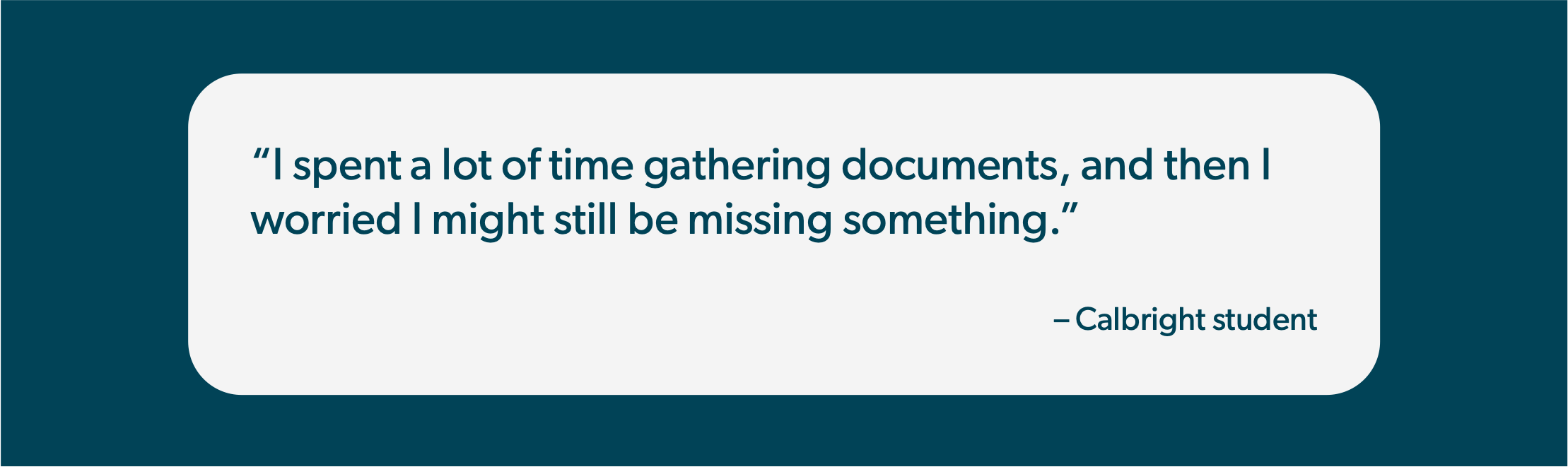
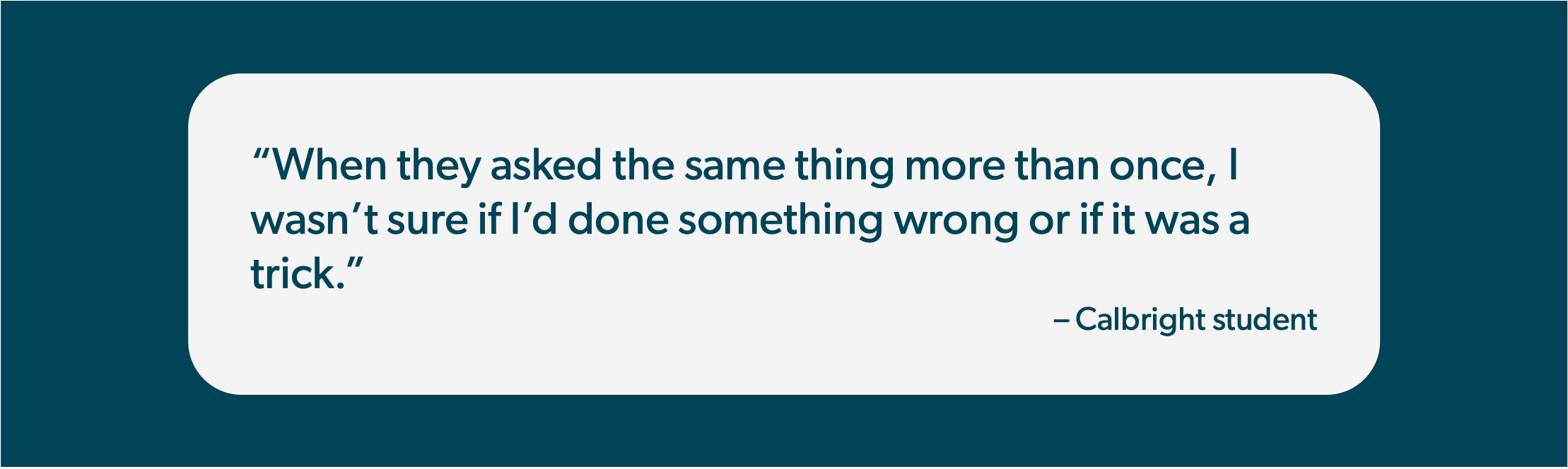
Students applying for public benefits often encounter confusion, unexpected complexity, and fear of making a mistake that could affect their eligibility. By observing students completing the BenefitsCal application and co-designing supports like a checklist, journey map, and tips sheet, we identified practical ways to clarify expectations, reduce anxiety, and help students follow through on complex applications.
Learning from students
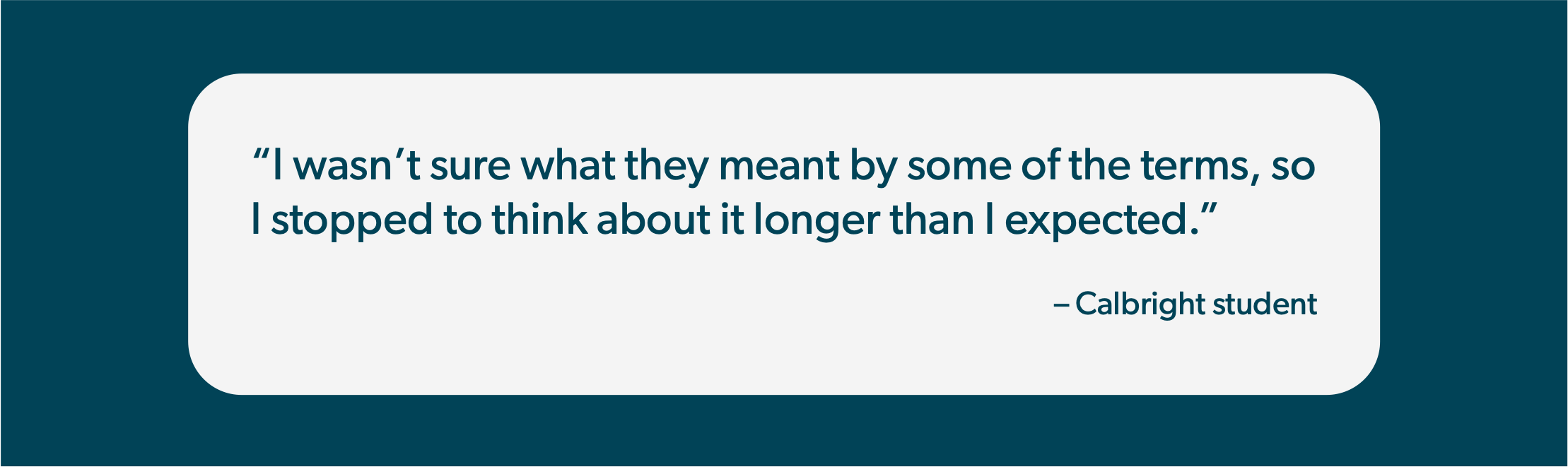
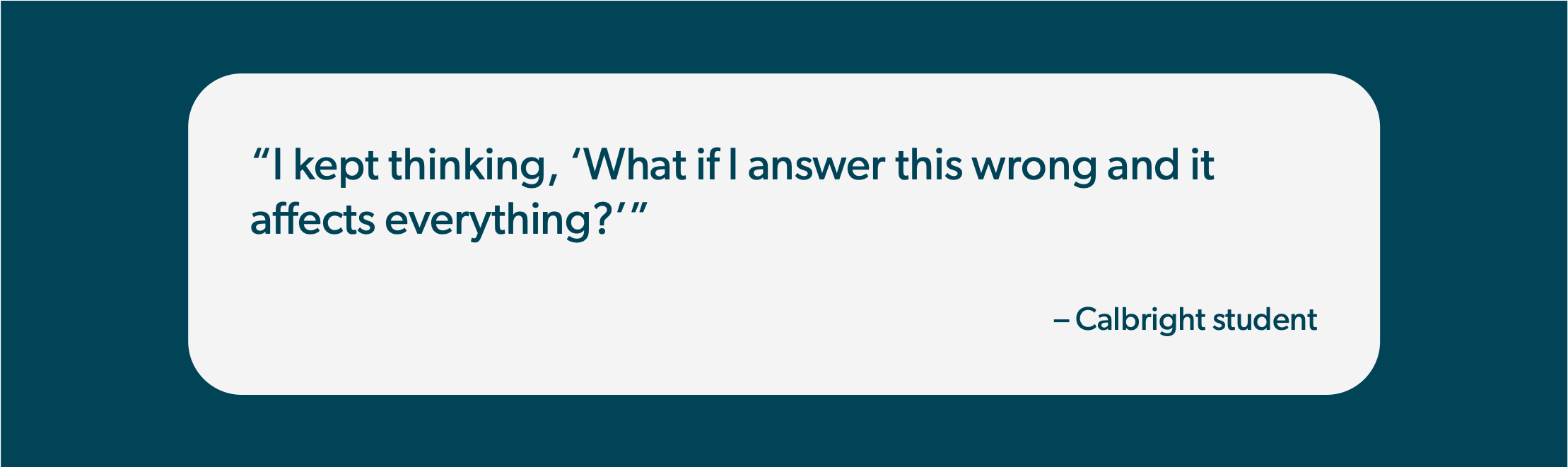
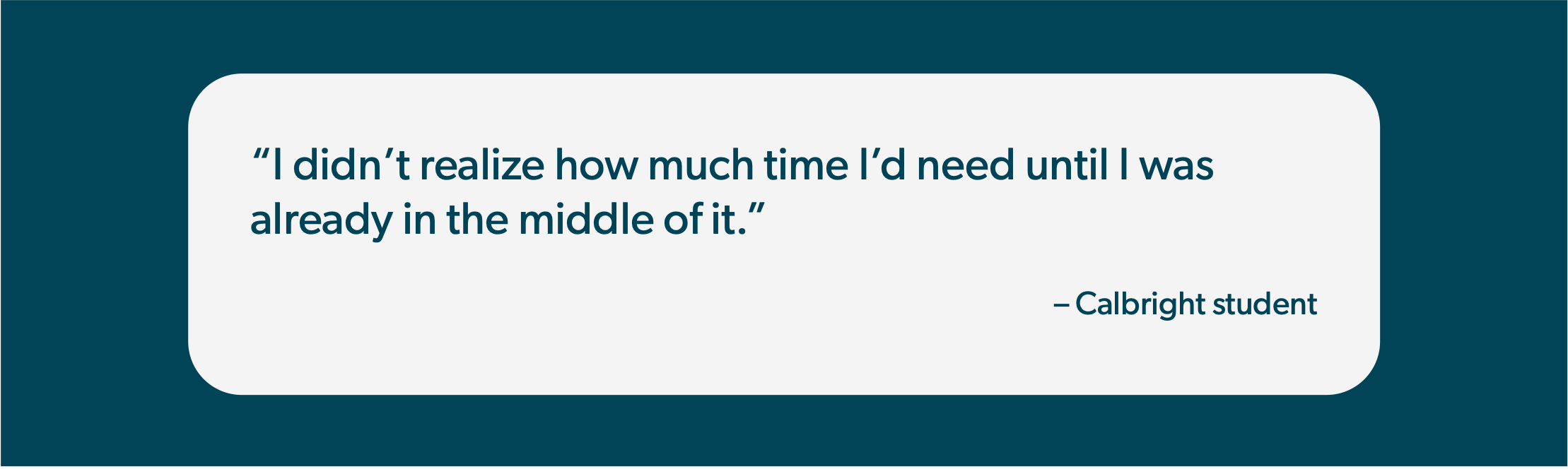
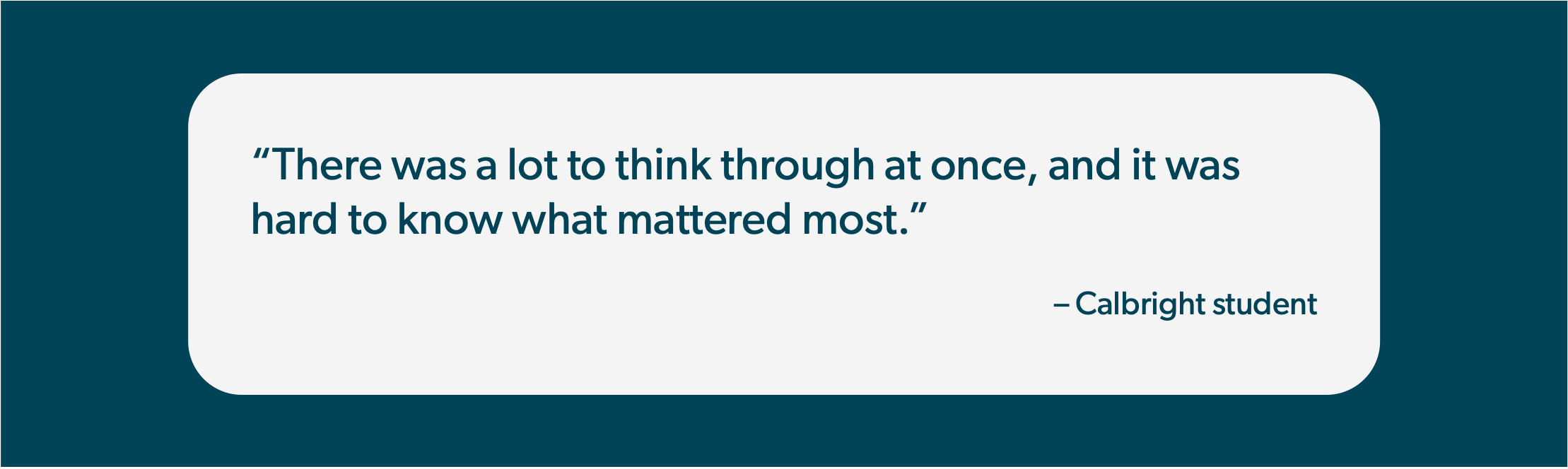
As a primary part of this work, we listened closely to students about their experiences navigating public benefits. Here are a few moments that shaped our design decisions.